
Container Storage vs Traditional Self Storage: Which Should You Choose?
Container storage means renting a steel unit, typically 5ft to 40ft, on a ground floor site with your own drive-up access, while traditional self storage means renting a room inside a warehouse building, reached by corridors and lifts during set hours. The right choice depends on how often you need access and how much handling you’re willing to do.
What Is Container Storage and How Does It Differ From Traditional Self Storage?
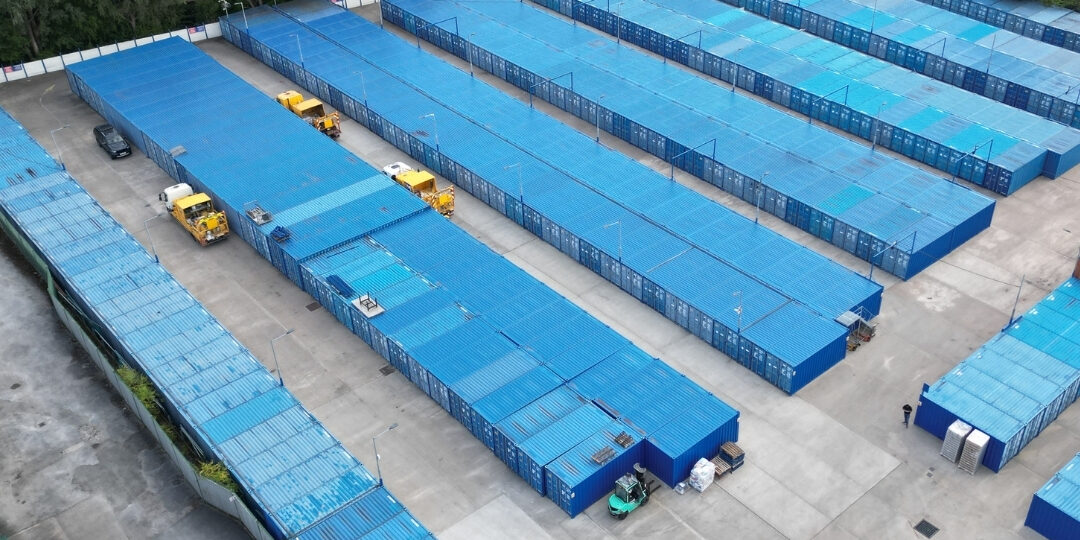
Container storage is exactly what it sounds like. You rent a steel shipping style container, usually sold in 5ft, 10ft, 20ft or 40ft sizes, positioned on a hard standing site with a number painted or fixed to the door. You park your car or van next to your own unit, unlock it, and load or unload directly from the boot or tailgate.
Traditional self storage works differently. The building itself is one large structure, often two or three storeys, divided internally into hundreds of individual rooms or cages of varying sizes. Instead of driving up to your specific unit, you drive to a shared loading bay, transfer your belongings onto a trolley or into a lift, and wheel them down a corridor to your room number.
The practical difference comes down to one thing: how many steps stand between your van and your belongings. Container storage removes most of them. Traditional self storage adds a shared entrance, a reception desk and a corridor system between you and your unit. Neither format is wrong, but they suit genuinely different habits and different types of user.
How Container Storage Actually Works: Drive-Up Access Explained
With container storage, access is almost always drive-up. At U Store U Lock’s Birmingham site on Small Heath Highway and the Stoke-on-Trent site at the Old Gas Works on Etruscan Street, every container sits at ground level with a hard standing area directly in front of it, so you reverse a van or trailer right up to the door.
This matters more than it sounds like on paper. A 20ft container holds roughly the contents of a three-bedroom house, and moving that volume through a single ground floor doorway with no stairs, no lift and no shared corridor can cut a moving day from six hours to three or four, purely because nobody is queueing for a trolley or waiting for a lift to come back down.
Forklift assistance and lorry access are also part of how container storage is built to work for commercial loads. A business bringing in a pallet of stock or a tradesperson unloading scaffold boards does not need to break the load down into hand carried pieces the way they often would inside a multi-storey self storage building. The unit is treated more like a small lockup garage than a room inside an office block.
How Access Actually Works: Container Storage vs Indoor Self Storage Opening Hours
This is where the two formats diverge most sharply, and it’s worth being precise about it rather than vague.
Many indoor self storage chains restrict customer access to set reception hours, commonly something like weekday daytime hours with reduced hours at weekends, because the building’s internal corridors, lifts and shared loading bays need staff on site to operate safely. If 24 hour access is offered at all inside that kind of building, it’s frequently sold as a paid add-on, or it requires manager approval and a separate access arrangement, rather than being included as standard. That’s simply a consequence of how a shared, multi-tenant building has to be run for everyone’s safety.
Container storage sites are built around a different physical layout, which is why 24 hour access tends to be far more common in this format. Because each unit has its own external door opening directly onto a gated yard rather than a shared internal corridor, there’s no lift, no shared lobby and no internal traffic to manage after hours. U Store U Lock’s sites in Birmingham and Stoke-on-Trent are accessible 24 hours a day as standard, on top of 24 hour manned security, 24 hour CCTV monitoring and secure gated premises, which is genuinely uncommon across the self storage sector as a whole. Most operators, whatever the format, do not staff their sites around the clock, so round the clock manned security combined with unrestricted access is one of the clearest practical differences a customer will notice between providers.
If your work or lifestyle means you need to collect tools at 6am, drop off stock after a late shift, or move house on a Sunday evening, the access model matters as much as the price. It’s worth asking any storage provider, container or traditional, exactly what their access hours are and whether 24 hour access is included or charged separately before you sign anything.
Container Storage and Self Storage Unit Sizes Compared
Container storage is typically sold in a smaller number of fixed sizes than traditional self storage, which tends to offer a wider spread of room dimensions to fill an irregular building layout.
| Format | Common sizes | Roughly holds |
|---|---|---|
| Container storage | 5ft, 10ft, 20ft, 40ft | 5ft: a few boxes and small furniture. 10ft: a one bedroom flat. 20ft: a three bedroom house. 40ft: a full house move or a small warehouse of stock |
| Traditional self storage | Often 12 to 250 sq ft rooms | Similarly ranges from a wardrobe sized locker to a small unit, but broken into more granular room sizes across multiple floors |
The container format’s fixed sizing is actually a strength for most customers because it removes decision fatigue. A tradesperson does not need to calculate square footage against a floor plan, they simply picture whether their tools fit in a 10ft unit the way they’d picture whether their tools fit in a single garage. For anyone still unsure exactly which size they need, this room by room guide to choosing the right storage unit size walks through typical household inventories against each size band, and is worth reading before you book either format.
Container Storage Costs vs Traditional Self Storage Costs: What You’re Really Paying For
Price comparisons between container storage and traditional self storage are notoriously difficult to do fairly, because the two formats are rarely selling exactly the same thing. A 10ft container storage unit and a 10ft indoor self storage room can carry very different price tags even though the floor area sounds identical, because the indoor price is also paying for the building’s shared lighting, lifts, corridors and staffed reception desk.
As a general rule, container storage tends to sit in the region of being the more budget friendly option for equivalent floor space, largely because it strips out the shared building overheads that a multi-storey facility has to fund through its unit prices. That said, promotional pricing moves constantly across the whole sector, and headline discounts such as 50% off the first two or three months, £90 off the first six months, or £150 off the first three months on selected 10ft or 20ft units are usually reserved for new customers on specific unit sizes, so the advertised rate and the rate you actually pay in month four can differ. Always ask what the price reverts to once an introductory offer ends, for any storage provider you’re comparing, before treating the headline figure as the real cost.
It’s also worth knowing that a storage unit rented for personal or business use is generally a straightforward running cost rather than a separate rateable property. The Valuation Office Agency’s own guidance on valuing self storage facilities for business rates confirms it’s the site operator, not the individual unit tenant, who is treated as the rateable occupier of the building. A sole trader or small business renting a container to store stock or tools is not taking on a new business rates liability by doing so.
Security Compared: Container Storage Sites vs Indoor Self Storage Facilities
Security is one of the areas where container storage sites and traditional self storage buildings can look similar on a spec sheet but feel very different in practice.
Both formats typically advertise CCTV and some form of access control, whether that’s a keypad entry system, an individual door alarm, or a staffed reception. Where U Store U Lock’s approach differs is in combining several layers at once rather than relying on just one: 24 hour manned security on site, 24 hour CCTV monitoring covering the yard and unit rows, and a secure gated premises that controls who can even drive onto the site in the first place. Most storage companies, whether they operate container sites or indoor buildings, do not offer round the clock manned security, they rely on remote monitoring or periodic patrols instead, which makes a genuinely staffed presence a meaningful point of difference rather than a marketing phrase.
For customers storing higher value stock, whether that’s a market trader’s van of goods, a joiner’s power tools, or an online seller’s entire inventory, the combination of a locked steel unit inside a gated, manned and CCTV monitored yard gives a level of physical separation a single internal door cannot fully replicate. Anyone comparing security between providers should ask three questions: is the site staffed around the clock or only during office hours, is CCTV monitored live or only reviewed after an incident, and is the perimeter itself gated, or is the only barrier the door to your own unit.
Which Format Wins? A Container Storage vs Self Storage Suitability Matrix
Rather than declaring one format universally better, it helps to map specific situations against which format tends to suit them best.
| Your situation | Better suited to | Why |
|---|---|---|
| You need to load and unload heavy or bulky items often | Container storage | Drive-up access with no lift or corridor to navigate |
| You’re storing a small number of boxes and rarely need access | Traditional self storage | A small indoor locker can work fine for occasional access |
| You need access outside typical daytime hours | Container storage | 24 hour access is standard on most container sites, including U Store U Lock |
| You’re a tradesperson storing tools and materials | Container storage | Drive-up access and forklift assistance suit trade vehicles and loads |
| You want your unit inside a single secured building with one main entrance | Traditional self storage | The building’s own perimeter functions as one combined barrier |
| You’re storing an entire house move for a few months | Container storage | 20ft and 40ft sizes suit full house contents without splitting the load |
| You need a very small locker for documents or seasonal items only | Traditional self storage | Smaller room sizes are often more granular indoors |
| You want to see and reach your unit directly from your vehicle | Container storage | Units sit at ground level with individual doors facing the yard |
| Your business needs pallet or lorry access | Container storage | Forklift assistance and lorry access are built around commercial loads |
Container Storage for Businesses, Tradespeople and Online Sellers
Business customers tend to get the clearest return from container storage because their storage needs usually involve stock, tools or equipment that arrives and leaves in bulk rather than a box at a time.
A tradesperson storing ladders, power tools and materials benefits from being able to reverse a van up to the unit at the start and end of every job, rather than hand carrying kit through a shared building corridor. An online seller running a growing inventory benefits from forklift assistance when a pallet arrives, and from being able to access stock at whatever hour an order needs picking, rather than being limited to a building’s staffed opening hours. A small business managing seasonal stock, filing or excess office furniture can treat a container unit much like an off site stockroom, with the equipment self storage option built around this kind of commercial use. Because the container is a lockable steel structure, it also suits businesses leaving tools or machinery unattended between jobs, with the padlock, gated site and manned security working together.
Container Storage for House Moves, Decluttering and Household Use
Household customers use container storage differently, but the drive-up access still tends to be the deciding factor.
During a house move, a 20ft or 40ft container can absorb an entire property’s contents for a few weeks or months while you exchange, complete or renovate, without carrying furniture through a shared indoor corridor twice. For anyone mid renovation or decluttering before a sale, a furniture self storage unit gives sofas, wardrobes and beds somewhere dry and secure to sit, and a dedicated decluttering self storage option suits anyone clearing a loft, garage or spare room gradually rather than all at once. Because access is available around the clock, there’s no need to plan a house move around another company’s reception hours.
Both branches serve their surrounding areas as well as the city itself. The Birmingham personal self storage site on Small Heath Highway serves customers across the city and its suburbs, while the Stoke-on-Trent personal self storage site at the Old Gas Works serves Stoke and the wider Staffordshire area, and the full list of towns covered by both branches is set out on the coverage page for anyone checking whether their postcode falls within a reasonable drive of either site.
Who Container Storage Isn’t Right For
Container storage isn’t automatically the right answer for everyone, and it’s worth being honest about where it falls short.
If you need to visit your unit several times a day for a very small number of items, a container can feel like overkill compared with a small indoor locker positioned near a lift and trolley bay. If your only viable transport is on foot or by public transport, the drive-up nature of container storage matters less to you, and a centrally located indoor room might genuinely be easier to reach. If you’re storing something extremely small, such as a single box of documents, a 5ft unit is still more space than you likely need. And if you specifically want your belongings inside one continuously staffed building with a single front door, an indoor facility may simply feel more familiar, even where the underlying security is broadly comparable.
Who Traditional Self Storage Isn’t Right For
The reverse is just as true. Traditional indoor self storage is not the right fit for every situation either.
If you need to move bulky furniture, building materials or pallets of stock regularly, navigating lifts, trolleys and shared corridors on every visit becomes a genuine time cost. If you need access outside a building’s staffed reception hours, and 24 hour access isn’t offered or is only a paid extra with manager approval, an indoor facility can leave you locked out exactly when you need to get in. If you’re a business receiving pallet deliveries, forklift access to an upstairs or internally located room is rarely practical, which makes drive-up container storage the more workable option. And if round the clock manned security specifically matters to you, rather than CCTV alone, it’s worth checking whether staff are present on site at night or only during office hours.
Real World Scenarios: Choosing Between Container Storage and Self Storage
Concrete situations tend to make the choice clearer than a general comparison, so here are four common examples.
A young family in Birmingham exchanging on a new house but with a six week gap before completion needs somewhere to put an entire three bedroom home’s furniture at short notice. A 20ft container storage unit, booked with drive-up access, lets a removal van unload directly without transferring boxes through a shared building, and the family can collect items ahead of moving day without booking an appointment first.
A self employed electrician working across Stoke-on-Trent and the surrounding Staffordshire towns needs to load his van with ladders, cable and fittings before 7am most mornings. An indoor self storage room with a 9am opening time simply doesn’t work for this routine, whereas a container unit with 24 hour access lets him load up whenever a job requires it, including before a first appointment on the other side of the city.
An online seller running a small homeware business out of Birmingham has outgrown a spare bedroom and needs somewhere to hold stock, pack orders and receive pallet deliveries from suppliers. Forklift assistance for unloading pallets and drive-up access for daily order picking make container storage a more practical base than an indoor unit reached via a lift, particularly once order volume means several visits a day.
A retired couple in Stoke-on-Trent downsizing to a smaller property need to store sentimental furniture and a handful of boxes for around four months while they decide what to keep. Their needs are closer to occasional access with no urgency around timing, which means either format could realistically work, but they choose a smaller container unit specifically for the reassurance of round the clock CCTV and a manned, gated site while the items are out of their hands.
Common Mistakes People Make When Choosing Container Storage or Self Storage
A handful of avoidable mistakes come up repeatedly when people choose between these two formats.
The first is underestimating size and booking a unit too small, then upgrading mid tenancy once boxes and furniture don’t fit. A room by room size guide before booking avoids this almost entirely. The second is not asking about access hours before signing, then discovering weeks later that the site closes at 6pm or that 24 hour access costs extra, right when an evening collection is needed. The third is focusing on the headline promotional price without checking what the unit costs once an introductory offer such as 50% off the first few months ends. The fourth is assuming all security claims mean the same thing, when CCTV reviewed only after an incident is not the same protection as 24 hour manned security with live monitoring. The fifth, more specific to businesses, is not checking whether a site can accommodate a pallet delivery or forklift unloading before signing, then finding stock has to be broken down and hand carried in regardless.
Container Storage Myths That Aren’t True
A few persistent myths shape how people compare container storage against traditional self storage, and most of them don’t hold up.
The first myth is that container storage is less secure simply because units sit in a yard rather than inside a building. Security depends on the layers in place, gated access, CCTV coverage and whether the site is manned, not on whether the outer wall is one building envelope or a fenced perimeter. The second myth is that container storage units are damp or poorly maintained compared with an indoor room. A well run container site cleans and checks units between tenancies, much like any other rented storage space, and condition depends on the operator’s standards rather than the format itself. The third myth is that indoor self storage is always more expensive, which isn’t strictly true either, since pricing depends heavily on location, promotions and unit size rather than format alone. The fourth myth is that 24 hour access is standard everywhere, when it varies significantly between providers and is frequently a paid extra or restricted option inside traditional indoor facilities.
Container Storage vs Self Storage: Our Verdict
For most of the customers U Store U Lock serves across Birmingham and Stoke-on-Trent, container storage is the more practical choice, and it’s worth saying plainly rather than hedging around it. Tradespeople loading vans before dawn, online sellers receiving pallets, families moving house at short notice and anyone who values 24 hour access with genuine round the clock manned security on site tend to get more day to day value from a drive-up container unit than from navigating a shared indoor building on someone else’s opening hours. That combination of round the clock access, manned security and a five star Google review record from customers who have actually used both branches is difficult for a purely indoor competitor to match.
That doesn’t make traditional self storage the wrong choice in every case. Someone storing a small number of boxes, with no interest in ever driving up to a unit, may still be better served by an indoor room. Container storage wins on access, speed of loading and commercial practicality for the majority of real world situations, while traditional self storage retains a narrower niche for small, low frequency, purely indoor preferences. Whichever format you’re weighing up, matching the unit size and access hours to how you’ll actually use the space matters more than the format label itself.
Container Storage vs Self Storage FAQ
Q: Is container storage cheaper than traditional self storage?
A: Container storage tends to sit in the region of being the more budget friendly option for equivalent floor space, mainly because it doesn’t need to fund a shared building’s lifts, corridors and staffed reception through its unit prices. Actual cost still depends heavily on location, size and any current promotional offer, so it’s worth comparing like for like sizes rather than assuming container storage is automatically cheaper in every case.
Q: Can I access a container storage unit at any time of day?
A: At U Store U Lock’s Birmingham and Stoke-on-Trent sites, yes, units are accessible 24 hours a day as standard, alongside 24 hour manned security and CCTV monitoring. This differs from many indoor self storage buildings, where access is commonly restricted to set reception hours unless 24 hour access is purchased as an add-on.
Q: What size container storage unit do I need for a house move?
A 20ft container typically holds the contents of a three bedroom house, while a 40ft unit suits larger properties or a house move combined with extra stock or equipment. A 10ft unit generally suits a one bedroom flat, and a 5ft unit suits a small number of boxes and light furniture. A room by room size guide is the most reliable way to match your specific inventory to a unit size before booking.
Q: Is container storage secure enough for expensive tools or stock?
A: Security depends on the layers around the unit rather than the format alone. A steel container inside a gated site with 24 hour manned security and CCTV monitoring, such as U Store U Lock’s branches, gives tradespeople and online sellers a level of physical separation that goes beyond a single padlocked door, which makes it a genuinely suitable option for higher value stock and equipment.
Q: Do container storage sites offer forklift assistance for business deliveries?
A: Yes, forklift assistance and lorry access are available for commercial customers, which suits businesses receiving pallet deliveries of stock or bulky equipment that would be impractical to hand carry through an indoor building’s corridors and lifts.
Q: How does traditional self storage access compare to container storage?
A: Traditional indoor self storage typically restricts customer access to set reception hours, commonly something like weekday daytime hours with reduced access at weekends, because the building’s shared lifts, corridors and entrance need staff present to operate safely. Container storage sites, built around individual ground floor units with their own external doors, are far more likely to offer 24 hour access as standard rather than as a paid extra.
Q: Can businesses store stock in a container unit without taking on extra business rates?
A: Generally yes. The Valuation Office Agency’s guidance on self storage business rates confirms that it’s the site operator, not the individual unit tenant, who is treated as the rateable occupier of a self storage facility, so renting a unit to store stock or equipment is treated as a standard running cost for most small businesses rather than a new rateable property in its own right.
Q: Is container storage suitable for household decluttering as well as full house moves?
A: Yes, container storage suits both. A smaller 5ft or 10ft unit works well for gradual decluttering of a loft, garage or spare room, while a 20ft or 40ft unit suits a full house move or a major renovation clear out, with drive-up access making repeat visits straightforward either way.
Q: What should I check before choosing between container storage and traditional self storage?
A: Confirm the unit size against your actual inventory using a size guide, check the site’s real access hours including whether 24 hour access is included or charged separately, ask whether security includes manned staff on site or CCTV alone, and check what the price reverts to once any introductory offer ends. These four checks apply equally whichever format and provider you’re considering.
Q: Does U Store U Lock offer both container sizes and 24 hour access at both branches?
A: Yes, both the Birmingham branch on Small Heath Highway and the Stoke-on-Trent branch at the Old Gas Works on Etruscan Street offer 5ft, 10ft, 20ft and 40ft container storage units with 24 hour access, 24 hour manned security, CCTV monitoring and secure gated premises as standard across both sites.