
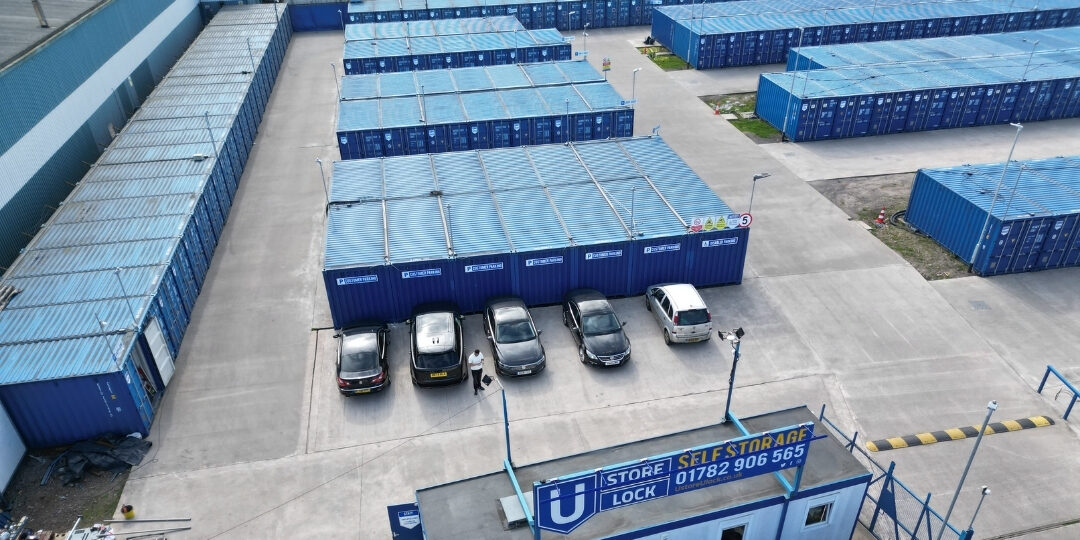
Tool theft cost UK tradespeople an estimated £99 million in 2025, with claims data from Simply Business showing over half of surveyed tradespeople had tools stolen and 94% never got them back. Storing tools overnight in a secure business storage unit with manned security removes the single biggest theft window: a van sat outside a house or job site with nobody watching it.
If you’re a tradesperson reading this, you probably don’t need convincing that tool theft is a real problem. You’ve either had it happen to you, or you know someone it happened to, and you’ve almost certainly seen the WhatsApp group photo of a van door peeled open at 6am before you’d even had your first coffee.
What’s worth spending five minutes on is the numbers behind that feeling, because they explain exactly why storage has become such a common part of how tradespeople now protect their kit, and where a secure unit actually fits into the picture.
Key takeaways
- Tool theft cost UK tradespeople an estimated £99 million in 2025, according to Simply Business insurance claims data
- Over half of the 645 tradespeople surveyed by Simply Business in 2025 reported experiencing tool theft, and 94% of victims never recovered their equipment
- Whole-van theft has dropped 98% since 2023 thanks to better immobilisers, but thefts from inside vans via forced entry (“peel and steal”) are now the dominant method
- 76% of thefts still happen from vans, but thefts from garages and home storage rose to 22% by 2024, up from 8% two years earlier
- Average tool theft claims have risen 24% since 2020, and individual incidents typically cost tradespeople between £1,000 and £5,000
How big is the tool theft problem in the UK right now?
Tool theft isn’t a niche worry dressed up by insurance marketing. It’s a documented, growing cost to the trades sector, and recent figures make that clear.
Simply Business’s 2025 claims analysis, based on a survey of 645 UK tradespeople alongside internal claims data from 2020 to 2025, put the total cost of tool theft to self-employed tradespeople at an estimated £99 million for 2025 alone. That figure was calculated using the number of self-employed tradespeople in the UK (748,000, per ONS data via Statista) multiplied by the theft rate reported in the survey and the average claim value.
A separate 2026 survey from Rhino Trade Insurance, covering 1,194 tradespeople, found close to one in three had personally had tools stolen at some point in their career. And Direct Line’s late-2025 research estimated the value of tools stolen that year at roughly £35 million based on Home Office-adjacent reporting figures, with a tool stolen from a UK trade van on average every 21 minutes according to separate 2026 analysis.
Derived context: if the average claim value sits around £2,646 (Simply Business’s 2025 figure) and over half of surveyed tradespeople have experienced theft, a tradesperson who hasn’t yet secured their kit is statistically closer to a five-figure lifetime loss across a career than most would assume, once you factor in repeat incidents. Simply Business’s own data shows 37% of victims were targeted twice, and 12% three times or more.
How are tools actually being stolen in 2026?
The method has shifted, and this matters for how you protect against it.
- Whole-van theft is down 98% since 2023. Modern immobilisers, tracking, and improved vehicle security (partly driven by the Thatcham Research New Vehicle Security Assessment extending coverage to rear doors and cargo areas) have made stealing an entire van much harder than it used to be.
- Forced entry into parked vans is now the dominant method. Simply Business’s claims data shows “property damage,” the industry term for forcing a van door open, is now the most reported cause of tool theft. Thieves aren’t driving off with your van anymore. They’re peeling a door open in under a minute, taking what’s inside, and leaving the vehicle behind.
- Location of theft is shifting too. In the original 2022 Tradespeople Against Tool Theft white paper, 39% of thefts happened from vans parked at home, 28% from building sites, and just 8% from garages or storage. By 2024, thefts from garages and home storage had nearly tripled to 22%, while thefts from inside tradespeople’s own homes rose to 4%. Read together with the drop in whole-van theft, that pattern suggests thieves are following wherever tools are left unattended and predictable, which increasingly means it isn’t only the van at risk.
The suitability matrix: where should you actually store your tools overnight?
| Storage method | Security level | Typical cost | Best for | Weak point |
|---|---|---|---|---|
| Van overnight, driveway | Low | Free (already have the van) | Tools used daily, low resale value items | Peel and steal forced entry, visible target |
| Van overnight, off street or garage | Medium | Free to low cost | The same tools, with slightly reduced visibility | Still vulnerable if the garage is not secured |
| Home shed or garage | Medium | Free to low cost | Larger, less portable equipment | Rarely alarmed, easy target once identified |
| Specialist van security box or cage | Medium to high | £150 to £400 as a one time cost | Daily use hand tools and mid value kit | Does not protect stock, materials or larger machinery |
| Secure storage unit, gated site and CCTV | High | From approximately £60 to £150 per month, depending on size | Overnight storage of full toolkits, stock, materials and machinery | Requires a short journey each morning and evening |
| Secure storage unit with manned security | Highest | From approximately £60 to £150 per month, depending on size | High value kit, business stock, tools between jobs or seasonal downtime | The journey is offset by stronger security and peace of mind |
The pattern in that table is straightforward: every option that costs nothing also offers the least protection, and the method thieves have most adapted to defeating (forced van entry) is exactly the one most tradespeople still rely on by default, simply because it’s free and requires no extra journey.
What does secure storage actually change for a tradesperson?
- It removes the single biggest theft window. A van parked outside your house, or on a street near a job site, overnight, is a static, predictable target that a thief can watch and return to. A locked container inside a gated site with manned security and CCTV is a fundamentally different proposition: there’s a perimeter, there’s someone on-site around the clock, and the vehicle carrying your tools isn’t the thing being targeted because the tools aren’t in it.
- It separates “what you need today” from “what you need eventually.” Most tradespeople don’t need every tool, every day. Ladders, larger power tools, seasonal equipment, stock, and materials for upcoming jobs can sit in a unit rather than rattling around a van that’s also your daily transport. That alone reduces both the volume of valuable kit exposed in the van at any one time and the temptation a fully-loaded van presents.
- It gives you somewhere for materials and stock, not just tools. Kitchen fitters, electricians, plumbers, and builders often carry fittings, cable, adhesives, and spare parts that a specialist van lock box simply isn’t built to hold. A 10ft or 20ft container unit, with drive-up access at ground level, handles that volume without needing a second vehicle or a rented lock-up on top of your existing costs.
- It reduces insurance friction. Many trade insurance policies now specify security requirements for overnight storage, and some insurers offer reduced premiums or fewer exclusions when tools are stored in a secured facility overnight rather than left in a vehicle. It’s worth checking your own policy wording, since specifics vary by insurer, but the direction of travel across the market (tool insurance uptake itself rose from 42% in 2023 to 66% in 2025, per Markel’s research) shows tradespeople are increasingly treating overnight security as a serious, insurable risk rather than an inconvenience.
Real scenarios: when storage makes the difference
- A kitchen fitter working across multiple sites in Birmingham. Carrying a full set of power tools, jigs, and fixtures between jobs means the van is loaded most of the day. Overnight, moving the bulk of that kit into a 10ft unit rather than leaving a fully-stocked van outside the house removes the exact profile (“loaded van, driveway, overnight”) that peel-and-steal thefts target most.
- An electrician stocking materials for a week of first-fix work. Cable drums, consumer units, and fittings for several jobs at once don’t need to travel in the van daily. Storing the week’s materials in a unit and loading only what’s needed each morning cuts down both the visible value in the van and the time spent searching for stock.
- A landscaper with seasonal equipment. Mowers, strimmers, and larger machinery used heavily in summer sit largely idle over winter. Businesses that also need space for vans, plant, or machinery can view our vehicle storage options. Rather than a garage at home (a common target once identified, per the 2024 theft-location data above) a storage unit with drive-up access keeps larger equipment secure and out of the way until the season picks up again.
- A builder between jobs with a gap in the schedule. Rather than tools sitting in a van on a driveway for two or three unplanned weeks, moving them into storage for that gap removes weeks of unnecessary exposure for the cost of a short-term unit rental.
Who this isn’t for
If you’re a sole trader with a small, low-value hand tool kit that you genuinely need with you on every single job with no gaps in your schedule, a specialist van lock box or cage might solve your problem more simply and more cheaply than a separate storage unit. Storage earns its cost when there’s a genuine gap between “what you’re carrying” and “what you need right now,” whether that’s overnight, between jobs, or seasonally. If every tool in your van is in daily use with zero downtime, the case is weaker.
Common mistakes tradespeople make with tool security
- Leaving a fully-loaded van outside the house every night out of habit. This is the single most common pattern in the theft-location data, and it’s the easiest one to change.
- Not photographing and serialising kit. Even with strong prevention, an inventory with photos and serial numbers, stored somewhere other than the van, massively speeds up an insurance claim and improves recovery odds if the worst happens.
- Assuming a van alarm is enough. Modern peel-and-steal methods target the door itself, not the ignition, so a standard alarm often doesn’t trigger before the tools are gone.
- Storing high-value tools and everyday stock in the same place with no separation. Keeping daily-use items accessible and higher-value or rarely-needed kit in longer-term storage reduces what’s exposed on any given day.
- Not checking what “24 hour security” actually means. Many self storage sites advertise CCTV and call it secure. CCTV records an incident; it doesn’t prevent one. Genuinely manned, staffed security around the clock is a different tier of protection, and it’s worth asking the question directly when you compare storage providers.
What secure storage looks like at U Store U Lock
We work with tradespeople across Birmingham and Stoke-on-Trent every week, and security is the reason most of them choose us over leaving tools in a van or a home garage. Both sites offer:
- 24 hour manned security, not just cameras
- 24 hour CCTV monitoring
- Secure gated premises
- Ground floor, drive-up units, so loading and unloading tools and materials doesn’t mean carrying anything up stairs or through internal corridors
- Forklift assistance and easy lorry access, for tradespeople moving heavier machinery or bulk materials
- Flexible unit sizes from 5ft up to 40ft, so a sole trader and a small building firm can both find the right fit
About U Store U Lock: we provide secure container self storage for tradespeople and businesses across Birmingham and Stoke-on-Trent, with 24 hour manned security, CCTV, gated premises, and drive-up access. Call Birmingham on 0121 312 3907 or Stoke-on-Trent on 01782 906 565 to discuss the right unit for your trade.
For other storage requirements, explore our personal storage and student storage services.
Frequently asked questions
- Is it worth paying for storage just for tools?
If tool theft is a realistic risk for your trade (and the data above suggests it is for most), the monthly cost of a small unit is typically far lower than the cost of a single theft incident, which averages £2,646 according to 2025 claims data, before accounting for lost work days. - What size unit does a tradesperson usually need?
Most sole traders and small teams start with a 5ft or 10ft unit for tools and start-of-week materials. Businesses carrying larger stock, machinery, or a fleet’s worth of equipment often move up to 20ft or 40ft. - Does storing tools overnight affect my trade insurance?
It can, in a positive direction. Some insurers offer better terms when tools are secured overnight in a facility rather than left in a vehicle, though this varies by provider and policy, so it’s worth checking your own wording. - How is a storage unit more secure than a van lock box?
A van lock box protects what’s inside it from casual theft but is still attached to a vehicle parked in a predictable, visible location. A gated storage site with manned security and CCTV adds a physical perimeter and an active human presence, which is a different level of deterrence entirely. - Can I access my tools early in the morning before a job?
Access arrangements vary by provider, so it’s worth confirming directly. At U Store U Lock, our sites are designed for tradespeople who need to load up before a job and drop off after, with drive-up access that doesn’t require navigating internal corridors or lifts. - What’s driving the rise in tool theft from garages and home storage?
Industry data suggests thieves are adapting as van security improves. As whole-van theft and easy van break-ins become harder, home garages and lock-ups (which are rarely alarmed to the same standard) have become a growing secondary target, which is part of why a professionally secured, manned site is a meaningfully different proposition to storing tools at home. - Do I need a special type of storage for machinery, not just hand tools?
Larger machinery, such as mowers, generators, or site equipment, generally needs a bigger unit (20ft or 40ft) and benefits from forklift or easy vehicle access for loading, which not every storage provider offers as standard.