
If you’re turning down bulk deals because there’s nowhere to put the stock, storing inventory across more than one room, or your family has stopped using a room because it’s full of boxes, your online business has outgrown home storage. UK online sales made up around 27% of total retail in 2024, and most sellers hit this exact wall within their first two years of growth.
Every online seller remembers the moment their stock first spilled out of a cupboard. What’s harder to notice is the point, usually much later, when “spilled out of a cupboard” has quietly become “taken over the spare bedroom, half the hallway, and most of the garage.” That shift tends to happen slowly enough that you don’t clock it as a business problem until it’s already costing you money.
This guide covers the specific signs that you’ve reached that point, what it’s actually costing you if you ignore it, and what moving stock into secure business storage changes for how you run the business day to day.
Key takeaways
- UK ecommerce accounted for roughly 27% of total retail sales in 2024, up from just 10% in 2013, and that growth is the reason so many home-based sellers hit a space ceiling
- Standard home contents insurance does not cover business stock, which means goods stored at home in growing volumes are frequently uninsured against theft, fire, or damage
- Most bedroom-based sellers start with roughly 30-85 sq ft of inventory space and need to add 30-50% more within a year of consistent growth
- A storage unit scales with your business (5ft to 40ft), unlike a spare room, which is fixed the day you move in
- The clearest signal you’ve outgrown home storage is turning down a good stock opportunity because there’s physically nowhere to put it
How much has UK ecommerce actually grown?
It’s easy to assume your own storage problem is just poor organisation. Often it isn’t. It’s a symptom of how fast UK online retail has grown underneath sellers who started small.
Office for National Statistics figures show online sales made up 26.6% of total UK retail sales in 2022, up from around 10% in 2013, a more than two-and-a-half-times increase in under a decade. More recent industry tracking puts the 2024 figure at roughly 27%. That’s not a niche trend. It’s a structural shift in how UK retail works, and it means the “start small from a spare room” model that worked fine for a side hustle in 2015 is now supporting businesses at a completely different scale for a growing number of sellers.
Property research firm Savills has documented the knock-on effect directly: rising self storage demand in London, in particular, is being driven partly by “a growing population” of home working and small online businesses needing somewhere to keep stock, alongside the more traditional drivers like house moves and cramped living space. The same pattern holds across UK regional cities, including Birmingham and Stoke-on-Trent, just at different price points.
The eight signs you’ve outgrown home storage
1. You’re turning down bulk buys or clearance deals because there’s nowhere to put them. This is the clearest commercial signal there is. If a good wholesale price or a clearance opportunity isn’t worth pursuing purely because of space, not cash flow, your storage constraint has become a growth constraint.
2. Stock is spread across more than one room, or more than one location. Once inventory needs a spreadsheet just to remember which cupboard, wardrobe, or corner of the garage a product line lives in, picking and packing slows down, and mistakes creep in.
3. A room in your house has stopped being used for its actual purpose. The spare bedroom that’s now “the stock room.” The dining table nobody eats at because it’s covered in packaging. This has a cost even if it never appears on a profit and loss statement: it affects how the household functions and how sustainable the business feels day to day.
4. Order fulfilment is getting slower, not faster, as the business grows. More sales should mean more efficient picking, not less. If locating stock, checking quantities, or finding the right packaging takes longer than it used to, the storage setup, not the process, is usually the actual bottleneck.
5. You’re storing business stock on standard home contents insurance, or not insuring it at all. This is a genuine risk most sellers only discover after something goes wrong. Standard home contents policies exclude business stock as a rule, which means a fire, flood, or burglary can leave a growing business completely unprotected on exactly the assets it depends on.
6. Returns and damaged stock have nowhere designated to go. Without a defined space for inspection, restocking, or write-off decisions, returns pile up in whatever gap is left, which usually means they get dealt with late, if at all.
7. Packaging materials, labels, and shipping supplies are stored separately from the stock they’re used for. When boxes are in the garage but tape and labels are in a kitchen drawer, batching orders (a core efficiency habit; sellers who batch report cutting per-order packing time by roughly 40% according to fulfilment industry estimates) becomes far harder to do consistently.
8. You’ve started saying “when the business is bigger” about moving to proper storage. This is usually a sign the decision is already overdue, not premature. Storage costs scale with the unit size you choose, so the “wait until I’m bigger” logic rarely holds up against the cost of continuing to lose time and space right now.
What does it actually cost to keep growing from home?
Time. Every extra minute spent locating stock, walking between rooms, or working around clutter is time not spent on sourcing, listings, or customer service. It’s rarely tracked, which is exactly why it’s easy to underestimate.
Insurance exposure. As noted above, home contents insurance typically excludes business stock outright. A seller with £5,000 of inventory stored across a spare room and garage, uninsured because nobody checked the policy wording, is one incident away from losing the entire business, not just some stock.
Household strain. A spare room, hallway, or garage that’s permanently full of boxes is a real cost to the people you live with, even if it doesn’t show up in the accounts.
Missed opportunity. Turning down stock deals, seasonal ranges, or new product lines because there’s nowhere to put them is lost revenue that’s genuinely difficult to get back later.
Slower growth than the market allows. With UK ecommerce still growing as a share of overall retail, sellers who solve their space problem tend to be the ones able to actually capture that growth, rather than capping their own business at whatever a spare room can hold.
Suitability matrix: which storage size fits your stage of growth?
| Business stage | Typical stock volume | Recommended unit | Why |
|---|---|---|---|
| Just started, side hustle | Fits in cupboards/one room | Home storage still works | Volume too low to justify a unit yet |
| Growing steadily, first signs of overflow | 30-85 sq ft equivalent | 5ft-10ft | Enough for stock, packaging, and returns without overpaying for space |
| Established seller, multiple product lines | 75-150 sq ft equivalent | 10ft-20ft | Room to separate stock, packaging, and a small pack-and-ship area |
| Scaling fast, seasonal peaks (Christmas, Black Friday) | 150-300 sq ft equivalent | 20ft-40ft | Handles peak-season stock builds without a second short-term rental |
| Multi-channel seller (Amazon, eBay, Etsy, TikTok Shop) | Variable, often high SKU count | 20ft-40ft | Space to organise by channel or SKU, not just by product type |
Real scenarios: how sellers actually use storage
An Etsy seller stocking up for the Christmas period. Handmade or curated stock for the festive season often needs building months in advance. Rather than a spare room disappearing under boxes from September, storing seasonal stock in a 10ft unit until the selling window opens keeps the house usable and the stock organised by when it’ll actually be needed.
An Amazon FBA seller between shipments. Stock waiting to be prepped, labelled, and sent to Amazon’s fulfilment centres needs somewhere secure and accessible in the meantime. A unit with drive-up access means loading a van for the next shipment run doesn’t mean carrying boxes through a house first.
A multi-platform reseller listing on eBay, Vinted, and Facebook Marketplace. Managing stock across three or four sales channels from one physical location gets complicated fast without a proper system. A larger unit gives enough room to organise by channel, which speeds up the daily process of matching an order to the right item.
A small business scaling past the “side hustle” stage. Once a seller is making regular replenishment runs, handling repeat wholesale collections, or carrying stock for a genuine peak season, the storage question stops being about whether more space is needed and becomes about how quickly to arrange it.
Common mistakes online sellers make with storage
Waiting until stock is genuinely unmanageable before acting. Most sellers described here waited months longer than they needed to, purely because the decision felt like an unnecessary expense rather than a growth enabler.
Choosing a unit based on today’s stock level, not the next six months. Ecommerce inventory grows in bursts, particularly around seasonal peaks. A unit with a little headroom avoids a second move within the year.
Not separating stock from packaging and shipping supplies. Even inside a storage unit, this habit matters. Keep a defined area for boxes, tape, labels, and packaging materials separate from product stock so batching orders stays efficient.
Assuming a bigger space always means a warehouse-level commitment. Container storage units, unlike commercial warehouse leases, typically come with flexible, rolling terms, meaning a seller can scale a unit size up or down as stock levels genuinely change, without signing a multi-year lease sized for revenue that hasn’t arrived yet.
Not checking whether stock is actually insured. Confirm directly with your storage provider and your own business insurer what’s covered and what isn’t. Don’t assume a policy that covers your home also covers stock sitting in a rented unit.
Why container storage works well for online sellers
Container business storage units suit ecommerce stock for a few practical reasons that a purpose-built indoor storage room doesn’t always offer in the same way:
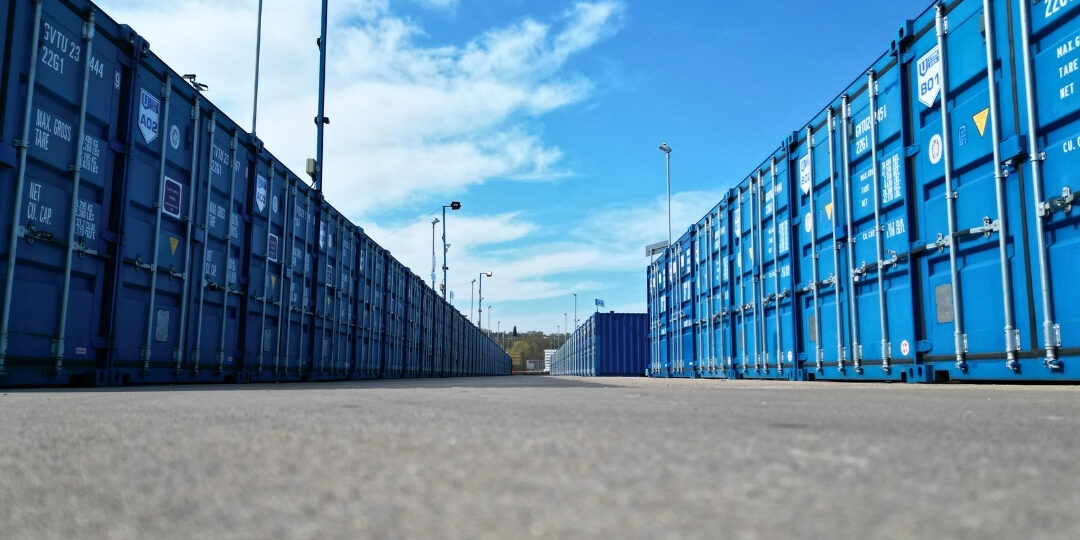
- Drive-up, ground floor access at both our Birmingham and Stoke-on-Trent sites means loading a van for a fulfilment run or an Amazon shipment doesn’t involve stairs, lifts, or long walks through a building.
- Forklift assistance and easy lorry access for sellers receiving bulk deliveries or shifting palletised stock, which most standard indoor storage rooms can’t accommodate at all.
- Flexible sizing from 5ft to 40ft, so a business can start small and upsize as stock grows, rather than overcommitting early or running out of room later.
- 24 hour manned security, CCTV, and a gated site, which matters more than most sellers initially think, given that business stock typically isn’t covered by home insurance in the first place.
- Packaging supplies available on site, including boxes, bubble wrap, tape, and locks, useful for sellers who’d rather not run a separate errand to source materials.
Related storage options: If you need space for household belongings, explore our personal storage. Students moving between accommodation can view our student storage. Businesses that also need secure parking for vans, commercial fleets, plant or machinery can explore our vehicle storage. You can also visit the U Store U Lock homepage.
Frequently asked questions
- At what point should an online seller move stock out of the house?
When you’re turning down stock opportunities due to space, when order fulfilment is slowing down because items are hard to locate, or when a room in the house has permanently stopped serving its original purpose. Any one of these is a reasonable trigger to look at storage. - Does home contents insurance cover business stock?
Generally no. Most standard home contents policies specifically exclude stock held for business purposes, which means sellers storing inventory at home in meaningful volume are often unknowingly uninsured against theft, fire, or water damage. - What size storage unit does a small online business typically need?
Most sellers start with a 5ft or 10ft unit and move up to 10ft-20ft as stock and product lines grow. Sellers managingmultiple sales channels or preparing for seasonal peaks often use 20ft to 40ft units. - Can I receive deliveries at a storage unit?
Delivery and access arrangements vary by provider, so confirm this directly. At U Store U Lock, both sites offer easy lorry access and forklift assistance, which suits sellers receiving bulk or palletised stock. - Is container storage secure enough for valuable stock?
Container units are built from the same steel used in ocean shipping, making them weatherproof and structurally secure. At both U Store U Lock sites, that’s combined with 24 hour manned security, CCTV, and gated premises, which is a higher security standard than many storage facilities offer as standard. - How quickly can I upsize my unit if my business grows faster than expected?
This depends on availability at the time, but container storage is generally far more flexible than a warehouse lease, and most providers, including us, can move a growing business into a larger unit without the long notice periods a commercial lease would require. - Is it worth storing stock somewhere I have to drive to, rather than keeping it at home?
For most growing sellers, yes, once the time cost of managing disorganised stock at home is weighed against a short regular journey to a dedicated, organised space. Many sellers find fulfilment actually gets faster once stock has a proper system, even accounting for the drive.