If you are comparing storage security before booking a unit, focus on three layers: who controls the site, what the unit is built from, and what lock you fit. A gated site with manned presence and CCTV, paired with a solid steel container and a closed shackle padlock, gives far stronger storage security than any single feature alone.
What Storage Security Actually Means When You Book a Unit
People searching for storage security usually picture one thing: a strong padlock. That matters, but it is only the last layer in a chain. Real storage security is the sum of several separate barriers that a person would have to get past, in order, before they could reach your belongings. Site security controls who gets onto the premises at all. Structural security determines how hard the unit itself is to force open, cut into, or lift. Lock security decides how long the final barrier holds up against bolt cutters, picks, or a crowbar.
Self storage providers vary enormously on all three. Some sites have nothing more than a keypad gate and a camera pointed at the entrance, unmonitored outside office hours. Others, including both U Store U Lock branches in Birmingham and Stoke-on-Trent, keep the site staffed and watched around the clock, seven days a week, with CCTV recording continuously and a gated perimeter that is never left open. When you are assessing storage security as a customer, you are really asking a chain of questions: can a stranger get onto this site unnoticed, can they reach my specific unit, and if they do, how long would it take them to get through the door. A provider that can answer all three convincingly is offering genuine storage security, not just a padlock and a promise.
The Three Layers of Storage Security: Site, Structure and Lock
Every serious conversation about storage security should separate the site from the structure and the structure from the lock, because a weakness in any one layer undermines the other two. A brilliant padlock on a flimsy door is still a weak point. A solid container behind an unmanned, poorly lit yard is still a target of opportunity. Understanding all three layers lets you judge a provider properly instead of being reassured by a single headline feature.
Site Level Storage Security: Gates, Manned Presence and CCTV
Site level storage security is about who can physically get near your unit in the first place. A gated, monitored perimeter is the single biggest deterrent in the whole system, because most opportunist theft depends on the offender being able to move around unseen and unchallenged. Sites with a locked gate, controlled entry and genuine staff presence remove that anonymity. Continuous CCTV recording adds a second function beyond deterrence: it gives police something to work with if anything does happen, and Staffordshire Police’s guidance on protecting property from crime highlights maintaining clear sightlines and removing hiding spots around buildings and outbuildings as a core part of reducing opportunist crime.
Both U Store U Lock branches operate with 24 hour manned security, 24 hour CCTV monitoring and a secure gated premises as standard, not as a paid extra. That is genuinely uncommon in the sector. Plenty of self storage sites, including some large indoor multi-storey chains, rely on remote monitoring or an alarm that only gets checked once triggered, rather than someone actually on site through the night. If you are comparing storage security between providers, ask directly whether there is a person present overnight or whether “24 hour security” actually means a camera feed nobody watches until something goes wrong.
Structural Storage Security: Ground Floor Containers and Access
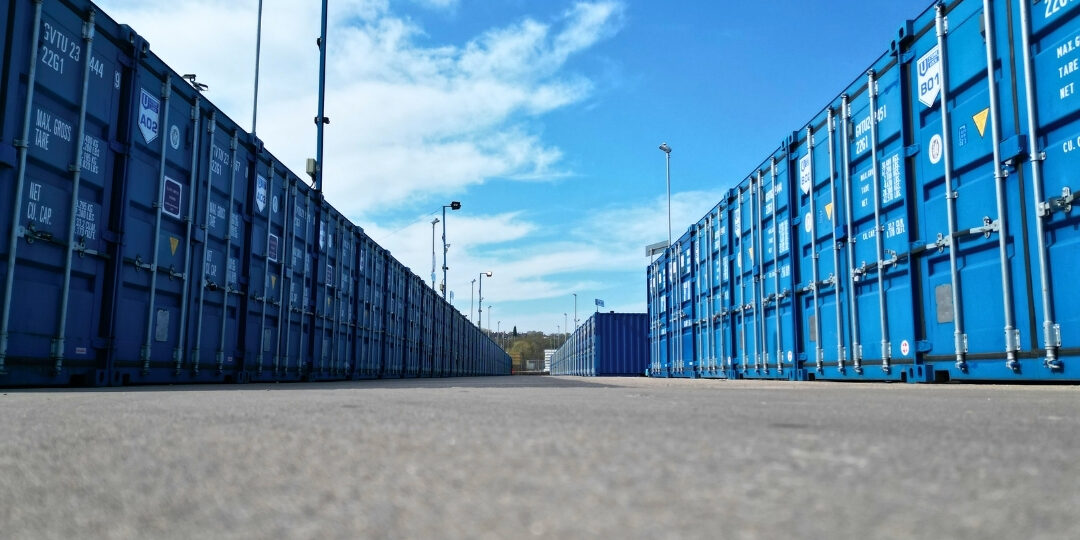
Structural storage security is about what happens once someone is already inside the perimeter, the scenario every other layer is trying to prevent. Steel shipping containers converted into storage units, like the ones used across both U Store U Lock sites, have a genuine structural advantage over stud partition walls or corrugated roll up doors found in some traditional indoor facilities. There is no ceiling void to climb through between units, no thin partition wall that can be cut with a hand tool, and no shared corridor door that, once forced, exposes dozens of units at once. Ground floor placement with drive up access also means there is no shared stairwell, lift lobby or internal corridor that a determined intruder could use to move unseen between units on the same floor.
This structural difference is worth understanding in plain terms. In a large multi-storey facility, a weak point on one floor can, in rare cases, expose several units along the same corridor, because the security of your unit partly depends on the units either side of it and the shared corridor door. With individual container units, each customer’s storage security is largely self-contained. What happens to unit forty does not weaken unit twelve, which is an underappreciated advantage of container based storage, alongside the convenience of driving straight up to your own door.
Lock Level Storage Security: Choosing the Right Padlock
Lock level storage security is the layer most customers focus on, and it is the one you have the most direct control over, because in most self storage arrangements you supply your own padlock. A cheap, thin shackle padlock bought for a few pounds is a false economy. It can be cut with a standard pair of bolt cutters in seconds. A closed shackle or disc style padlock, where the shackle is largely hidden inside the lock body, is far harder to get a cutting tool onto and is the standard recommendation for anyone storing valuable tools, stock or household items.
Beyond the padlock itself, pay attention to the hasp and staple it attaches to. A strong padlock bolted onto a weak, exposed hasp is still a weak system overall, because the whole point of layered storage security is that every link in the chain needs to hold, not just the most visible one. It is also worth photographing serial numbers and marking higher value tools or equipment before they go into storage. West Midlands Police’s guidance on marking property notes that identifiable items are both harder to sell on and easier for police to return if they are ever recovered, which is a useful extra layer on top of the unit lock itself. U Store U Lock sells padlocks alongside boxes, tape and bubble wrap at both branches, so customers who arrive without one, or with something inadequate, can pick up something suitable on the spot rather than delaying their move.
Why Secure Storage Matters More for Some Customers Than Others
Not every customer has the same amount riding on storage security, and it is worth being honest about that rather than treating every booking the same way. Someone storing a few boxes of clothes and old photographs during a house move has a different risk profile to a tradesperson storing several thousand pounds of power tools, or an online seller storing stock that represents their entire working capital.
Storage Security for Tradespeople and Tool Storage
Tools are one of the most commonly targeted categories of stolen property in the UK, largely because they are compact, valuable, easy to resell and hard to trace back to an owner once removed from a liveried van or site container. National crime figures published by the Office for National Statistics show theft from outside dwellings has been rising even as overall household theft has fallen over the past decade. That lines up with what tradespeople already know from experience: kit left somewhere uncontrolled is a soft target compared with kit stored behind a gated, monitored perimeter. A tradesperson storing kit between jobs needs every layer of storage security working properly: a gated, manned site so a van cannot simply back up to an unwatched unit, a solid container rather than a shed style structure, and a closed shackle padlock rather than whatever was left over from a previous job. Businesses that store tools with U Store U Lock benefit from ground floor drive up access, which matters practically too, since loading a van full of ladders, generators and power tools is far easier without stairs or a lift involved.
Storage Security for Business Stock and Equipment
For a business storing stock, equipment or seasonal inventory, storage security is not just about theft, it is about continuity. A break in that empties a unit full of online business inventory does not just cost the value of the goods, it can stall order fulfilment for days while stock is replaced. Businesses tend to underestimate this knock on cost when they are comparing storage providers purely on price per week. A slightly higher price at a site with genuine manned security and CCTV can work out cheaper overall once you account for the operational disruption a theft would cause, on top of the direct loss.
Storage Security for House Moves and Decluttering
Household customers moving house, decluttering, or storing belongings during a renovation often assume storage security matters less because the individual items feel less valuable than a tradesperson’s tools or a retailer’s stock. In practice, a house move unit frequently contains furniture, electronics, jewellery boxed up in a hurry, and sentimental items that are irreplaceable regardless of resale value. The same three layers of storage security apply just as much here. A gated, staffed site with CCTV protects a family’s belongings exactly the same way it protects a tradesperson’s tools, and a decent padlock costs very little next to the value of what is behind the door.
Storage Security Compared: Containers Versus Traditional Indoor Self Storage
Customers researching storage security often assume that a large, purpose built indoor facility must automatically be the safer option, because it looks more corporate. That is not necessarily true once you break the comparison down by layer rather than by appearance.
Traditional indoor self storage buildings typically offer strong perimeter security at the building level, often with fob access and internal CCTV in corridors. Where storage security can weaken is at the individual unit level, since many indoor units are separated by thin partition walls or mesh style ceilings designed for ventilation rather than resistance, and shared corridors mean more people moving past your specific door on any given day. Access can also be slower, with lifts, corridors and multiple floors meaning more time spent with a unit propped open while items are carried back and forth.
Container based storage, by contrast, tends to concentrate its storage security at the individual unit level. Each unit is a fully enclosed steel box with its own external door, so there is no shared internal wall, no corridor, and no ceiling void connecting it to the unit next door. Ground floor drive up access also reduces the amount of time a unit needs to sit open during loading, since vehicles can pull directly alongside. The trade off is that container sites are generally smaller and more localised than the biggest multi-storey chains, which suits businesses and households in a specific area like Birmingham or Stoke-on-Trent very well, but is less useful if you need a facility in every major UK city.
Neither format is universally superior. The honest comparison is that indoor facilities put more of their storage security budget into the building shell, while well run container sites put more of it into site level control, staffing and per-unit structural isolation. For a full comparison of unit dimensions once you have settled on a format, the room by room sizing guide is a useful next step: what size storage unit you need.
Storage Security Suitability Matrix: Who Each Option Actually Suits
The table below sets out how different storage security priorities map onto different customer types, based on what each group typically needs to protect and how often they need access.
| Customer type | Main storage security priority | Best suited unit approach | Access pattern |
|---|---|---|---|
| Tradesperson storing tools | Theft deterrence, closed shackle lock | 10ft or 20ft container, manned gated site | Frequent, early morning or evening |
| Online seller storing stock | Continuity of supply, CCTV evidence trail | 20ft container with easy loading | Frequent, sometimes daily |
| Household house move | Basic deterrence, weatherproofing | 10ft or 20ft container | Infrequent, in bursts |
| Business documents and records | Confidentiality, controlled access, dryness | 5ft or 10ft container | Occasional |
| Renovation or decluttering | Short term deterrence, easy drop off | 5ft or 10ft container | Occasional, unpredictable |
| Commercial equipment or plant | Forklift access, structural strength | 20ft or 40ft container | Scheduled, sometimes with lorry access |
| Landlord storing furniture between tenancies | Long term reliability, low maintenance | 10ft or 20ft container | Rare |
This is a starting point rather than a fixed rule. Someone storing a single high value item, such as a motorbike, may prioritise storage security over unit size, while someone storing bulky low value furniture may prioritise cost and access over maximum security. For business specific storage needs, the tools, equipment and documents pages set out sizing and access detail relevant to each category: tools self storage, equipment self storage, and documents self storage.
Real World Storage Security Scenarios in Birmingham and Stoke-on-Trent
It helps to walk through how storage security plays out in practice rather than staying abstract. Consider a plumber based near Small Heath who needs somewhere to keep pipework, a generator and hand tools between contracts. Leaving that kit in a van overnight is a known risk, since van break ins are a common form of tool theft. Moving that same kit into a gated, manned container site removes the van as the weak point entirely, because the site itself becomes the barrier rather than a locked door on a vehicle parked on a public street.
Consider next a small online retailer in Stoke-on-Trent who has outgrown a spare bedroom and is storing boxed stock in a 20ft unit. Their main concern is not a single dramatic break in, it is the slow risk of casual opportunist theft if a site is quiet, poorly lit or unmonitored between visits. A staffed, CCTV covered site with a gated perimeter closes off that opportunity, and drive up access means stock can be moved in and out quickly, reducing the time any unit sits open during a delivery run.
Finally, consider a family in Birmingham mid house move, with furniture, boxed electronics and a few sentimental items sitting in a unit for six to eight weeks while their new home is finished. Their need is less about a single high value target and more about baseline reassurance that nobody unconnected to the family can wander up to that unit unseen. A gated site with round the clock presence provides exactly that reassurance, without the family needing to think about it again once the unit is locked.
In every one of these scenarios, the pattern is the same. Storage security is not one decision made once at the padlock. It is a set of conditions, controlled access, structural containment and a decent lock, that either hold together as a system or do not.
Storage Security Mistakes That Quietly Undo Good Intentions
Even careful customers make small storage security mistakes that undo an otherwise sound setup. The most common is buying a strong padlock but leaving the key somewhere predictable, such as inside a vehicle parked at the same site, or giving a spare key to more people than necessary without keeping track of who holds one. A lock is only as secure as the management of its keys.
A second common mistake is choosing a site purely on price without asking what “security” actually includes. Marketing language like “secure site” or “CCTV protected” can mean anything from a genuinely staffed, monitored premises to a single camera facing a car park that nobody reviews unless asked. It is worth asking a provider plainly whether the site is staffed overnight and how long CCTV recordings are retained, rather than assuming the word secure means the same thing everywhere.
A third mistake is failing to check what insurance cover applies to stored goods. Customers sometimes assume their home contents policy automatically extends to a separate storage unit, which is not always the case and should be checked directly with the insurer.
A fourth, more subtle mistake is treating storage security as a one-off decision made at booking and never revisited. A padlock adequate for a few months of light household storage may not be adequate once the unit starts holding higher value stock or tools months later. It is worth periodically reassessing whether the lock still matches the value of what is stored.
Storage Security Myths Worth Retiring
A few persistent myths distort how people think about storage security, and clearing them up helps set realistic expectations.
The first myth is that a bigger, more corporate looking facility is automatically more secure than a smaller, local one. Facility size has little correlation with actual storage security. What matters is whether the site is genuinely staffed and monitored, not how large the building is or how polished the branding looks.
The second myth is that CCTV alone prevents theft. CCTV is a deterrent and, after the fact, a valuable source of evidence for the police, but a camera does not physically stop anyone from acting. It works best alongside manned presence and a gated perimeter, not as a replacement for either.
The third myth is that any padlock is basically as good as any other, since they all “lock the same door.” In practice, an open shackle budget padlock can be defeated with bolt cutters in seconds, while a closed shackle security padlock genuinely resists that kind of attack.
The fourth myth is that storage security is only relevant to businesses storing high value stock. Household customers storing furniture, electronics and sentimental items have just as much reason to care about site and structural security as any commercial customer, even where the items are not high value on paper.
Who Secure Storage Isn’t Right For
It is worth being honest that secure, staffed container storage is not the right fit for every situation, even when the security credentials are strong. Anyone needing storage in a location with no nearby container site, and unwilling to travel, will reasonably choose a facility closer to home even if its security setup is less comprehensive, because convenience and distance are genuine practical constraints. Similarly, anyone needing access at unusual hours outside a site’s staffed window, for example regularly in the middle of the night, may find a facility with automated, unstaffed access better suited to their pattern, even if that comes with a different security trade off.
Storage that needs to sit inside a controlled environment for reasons unrelated to security, such as extremely temperature sensitive stock, is also outside what a standard container unit is designed for, regardless of how strong the site’s gate and CCTV setup is. Finally, anyone storing items so low in value that a security conscious unit outweighs the value of what is being stored may be better served by a cheaper, more basic option, since matching security spend to the value stored is itself part of making a sensible decision.
How to Judge Storage Security Before You Book
Before booking any unit, it is worth working through a short set of direct questions with the provider, rather than relying on the word “secure” appearing somewhere on their website. Ask whether staff are physically present overnight, not just an alarm checked remotely. Ask how long CCTV footage is stored and whether it covers the area outside individual units rather than only the main gate. Ask whether the perimeter is fully gated with controlled entry, or technically open access during certain hours. Ask what type of padlock is recommended, and whether one can be bought on site if needed. Ask how units are separated structurally, particularly when comparing a container site against an indoor multi-storey facility. Ask what happens in the rare event of a break in, including how quickly the provider notifies affected customers and what evidence would be available to support a police report or an insurance claim.
A provider that answers these questions confidently, rather than deflecting to general reassurance, is far more likely to be delivering genuine storage security day to day. Both U Store U Lock branches, in Birmingham and Stoke-on-Trent, are built to answer every one of those questions directly, with round the clock manned presence, continuous CCTV, a gated perimeter and a five star Google review record built on customers who have tested that setup in practice. Full local coverage details for both branches, along with directions and opening information, are available on the coverage page, and branch specific business storage detail is available for Birmingham and Stoke-on-Trent.
The Honest Verdict on Storage Security in Birmingham and Stoke-on-Trent
Storage security is not a single feature to tick off and forget. It is a layered system, site control, structural containment and lock strength, that has to hold together as a whole rather than rely on one strong link to cover for weak ones elsewhere. Customers who ask direct questions about staffing, CCTV retention, gated access and structural separation between units end up making far better decisions than those who choose purely on price or on how professional a website looks.
For Birmingham and Stoke-on-Trent customers specifically, container based storage with genuine round the clock manned security, continuous CCTV and a gated site removes most of the practical weaknesses found at less carefully run facilities, while ground floor drive up access keeps loading fast, which itself reduces the time any unit sits open. It will not suit every situation, particularly where distance, unusual access hours or specialist environmental needs are the deciding factor, but for most tradespeople, business owners and households storing tools, stock, documents or furniture, it represents a genuinely strong, tested approach to storage security rather than a marketing claim.
Storage Security FAQs
Q: What is the most important layer of storage security?
A: No single layer matters most on its own, but site level control tends to have the biggest overall effect, because a gated, staffed and monitored site prevents opportunist access before anyone even reaches an individual unit’s lock.
Q: Is a disc padlock better than a standard shackle padlock for storage security?
A: Generally yes. A closed shackle or disc style padlock hides the shackle inside the lock body, making it far harder to position bolt cutters or a similar tool, whereas an open shackle padlock leaves an exposed loop that is comparatively easy to cut.
Q: Does CCTV actually reduce theft, or does it only help after the fact?
A: Visible CCTV acts as a genuine deterrent for opportunist offenders who prefer to avoid being recorded, and it also provides evidence for the police and for insurance claims if an incident does happen. It works best combined with manned presence rather than as a standalone measure.
Q: Is container storage as secure as an indoor multi-storey self storage building?
A: It can be more secure at the individual unit level, since each container is a fully enclosed steel box with no shared internal wall or corridor, whereas indoor facilities sometimes rely on partition walls and shared corridors between units on the same floor.
Q: Do I need my own insurance for items in a storage unit?
A: In most cases, yes, cover for stored contents needs to be arranged or confirmed separately rather than assumed under an existing home contents policy, so check directly with your insurer before booking.
Q: How does 24 hour manned security differ from 24 hour CCTV alone?
A: CCTV records what happens but does not intervene. Manned security means a person is physically present on site, able to notice and respond to something unusual in real time, which is a meaningfully different and stronger level of storage security than recording alone.
Q: What size unit gives the best storage security for tools and equipment?
A: Unit size itself does not change the level of storage security, since site and structural protections apply equally regardless of unit size. The right size depends on the volume of tools or equipment being stored, with 10ft and 20ft units suiting most tradesperson and small business needs. A full breakdown is available in the room by room sizing guide.
Q: Should I tell a storage provider what I am storing?
A: It is sensible to give a general indication, particularly for higher value business stock or equipment, since it allows the provider to advise on the right unit type and locking arrangement, without needing to disclose exact values.
Q: Are ground floor units with drive up access more secure than upper floor units?
A: Ground floor drive up units reduce the time a unit needs to sit open during loading, since a vehicle can be parked directly alongside, and they avoid shared internal corridors, lifts and stairwells that connect multiple units together, which is a structural storage security advantage over upper floor arrangements.
Q: What should I do if I suspect a break in at a storage site?
A: Report it to site staff immediately and to the police, and ask the provider to preserve the relevant CCTV footage, since retention windows vary and evidence is easier to secure quickly than after a delay.